
Executive Summary (TL;DR)
-
The coconut charcoal briquette export trends for 2026 indicate a massive shift towards 100% natural, chemical-free products driven by strict European Union environmental regulations.
-
European buyers increasingly demand exceptional charcoal quality control, specifically requiring Fixed Carbon above 80% and Ash Content strictly below 2.5% to ensure a premium shisha experience.
-
Sourcing directly from an authentic Indonesia charcoal manufacturer eliminates middleman markups, securing highly competitive B2B wholesale pricing for international distributors.
-
Optimizing global logistics through direct FOB Tanjung Perak or CIF shipping terms guarantees faster, safer, and more cost-effective container delivery to major European ports like Rotterdam and Hamburg.
Decoding the Coconut Charcoal Briquette Export Trends for 2026
Navigating the global biomass fuel market requires a deep understanding of shifting consumer preferences and international trade regulations. Furthermore, as the European market becomes increasingly sophisticated, B2B importers must adapt their procurement strategies to remain competitive. Consequently, analyzing the current coconut charcoal briquette export trends is absolutely essential for large-scale distributors aiming to dominate the 2026 fiscal year. This strategic foresight allows businesses to align their supply chains with the exact specifications demanded by premium end-users.
The European continent has historically been a massive consumer of carbonized products for both culinary grilling and recreational shisha lounges. However, recent regulatory shifts and consumer awareness campaigns have fundamentally altered the landscape. Primarily, the market is aggressively pivoting away from low-grade, chemically bound briquettes towards sustainable, natural alternatives. Therefore, understanding these nuanced market dynamics is the first step toward securing a highly profitable import operation.
The Rise of the Sustainable Shisha Charcoal European Market
The recreational shisha and hookah industry across Europe has experienced unprecedented, exponential growth over the last decade. Furthermore, countries such as Germany, the United Kingdom, Spain, and France have seen a massive proliferation of premium, high-end shisha lounges. Consequently, these upscale establishments demand a remarkably pure, odorless, and smokeless heat source to preserve the delicate flavor of premium shisha tobacco. This specific consumer demand directly fuels the upward trajectory of the coconut charcoal briquette export trends we are observing today.
European consumers are now highly educated regarding the health and environmental impacts of the products they consume. Subsequently, they explicitly reject quick-light charcoal that contains harmful chemical accelerants like sulfur or saltpeter. In fact, the modern European shisha enthusiast strictly prefers 100% natural coconut shell charcoal due to its clean-burning profile. Therefore, importers must secure a reliable coconut shell charcoal supplier that guarantees an absolutely chemical-free manufacturing process.
Shift Towards Premium Briquette Raw Materials
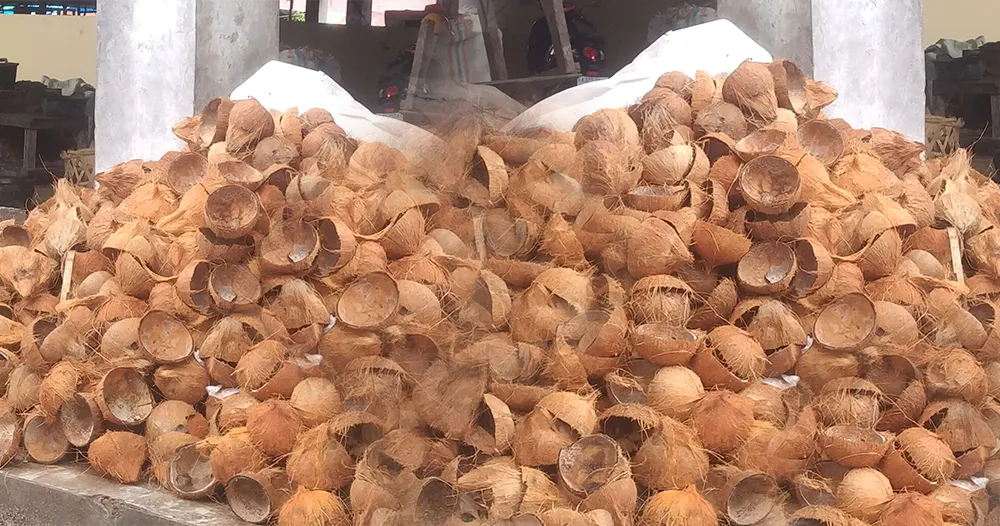
The foundation of any high-quality carbonized product lies entirely in the integrity of its base ingredients. Historically, some manufacturers utilized mixed wood scraps or low-density agricultural waste to reduce production costs. However, the 2026 European market aggressively rejects these inferior blends due to their high ash output and volatile burning temperatures. Consequently, the industry is witnessing a massive, uncompromising shift towards sourcing premium briquette raw materials, specifically mature, fully dried coconut shells.
Mature coconut shells inherently possess a remarkably high lignin and cellulose density compared to other biomass sources. Furthermore, when processed correctly, this high-density material translates into an exceptionally long-burning briquette that maintains a stable thermal output. Ultimately, this ensures the shisha tobacco is heated evenly without burning or producing acrid smoke. Therefore, savvy B2B buyers are prioritizing factories that explicitly guarantee the exclusive use of high-grade, single-origin coconut shells.
European Market Compliance and Stringent Quality Standards
Importing combustible organic materials into the European Union requires strict adherence to highly complex regulatory frameworks. Furthermore, European customs authorities and consumer protection agencies have significantly tightened their oversight regarding imported biomass fuels. Consequently, comprehensive charcoal quality control is no longer merely a marketing term; it is a strict legal and operational prerequisite for market entry. Failing to meet these exacting standards often results in delayed shipments, costly port rejections, or permanent brand damage.
European distributors must ensure that their imported briquettes undergo rigorous, independent laboratory testing prior to shipment. Primarily, these tests verify critical chemical metrics, ensuring the product is safe for indoor use and complies with local health guidelines. In fact, European buyers are increasingly demanding transparent certificates of analysis (COA) for every single shipping container. Therefore, partnering with a highly professional manufacturer capable of consistently meeting these specifications is absolutely vital.
Strict Charcoal Quality Control for EU Buyers
Maintaining absolute consistency across massive, multi-ton production batches is the ultimate hallmark of a world-class manufacturing facility. However, many rudimentary kilns completely fail to achieve this uniformity, resulting in fluctuating quality that alienates premium European clients. Consequently, advanced factories implement multi-stage charcoal quality control protocols that govern everything from initial raw material selection to the final extrusion and drying phases. This scientific approach guarantees that every single briquette performs flawlessly.
The Crucial Importance of Low Ash Content
Ash content is undeniably one of the most critical metrics evaluated by premium European shisha lounges. Furthermore, excessive ash not only acts as a thermal insulator that reduces heat transfer but also creates an unappealing, messy user experience. Consequently, top-tier European buyers demand an ash content strictly below 2.5%, with a strong preference for pure white or light grey ash. Therefore, manufacturers must utilize intensive sifting and washing techniques to remove completely any silica or soil contaminants before the carbonization process begins.
Moisture Content Management for Winter Deliveries
Transporting organic, carbonized products from the humid tropics of Indonesia to the freezing winter ports of Europe presents a massive logistical challenge. Primarily, drastic temperature fluctuations during the maritime voyage can cause severe internal condensation inside the shipping container. Subsequently, if the briquettes possess a high internal moisture content, they will inevitably develop mold, structural cracks, or lose their ignition capabilities entirely. Therefore, advanced factories rigorously dry their briquettes in industrial oven rooms to push the moisture content below a strict 5% threshold before packaging.
REACH Compliance and Environmental Regulations
The European Union’s REACH (Registration, Evaluation, Authorisation and Restriction of Chemicals) regulation heavily influences all imported goods. Furthermore, while natural coconut charcoal is generally exempt from complex chemical registrations, the binders and packaging materials are strictly scrutinized. Consequently, importers must ensure that their Indonesia charcoal manufacturer uses only 100% natural, food-grade tapioca starch as a binding agent. Using synthetic chemical binders will immediately trigger customs delays and compliance violations at major European entry ports.
Sourcing from an Authentic Indonesia Charcoal Manufacturer
Indonesia remains the undisputed global epicenter for premium coconut shell charcoal production. Primarily, the archipelago boasts massive, year-round coconut harvests, providing an incredibly abundant and highly sustainable source of raw materials. Therefore, to capitalize on the lucrative coconut charcoal briquette export trends, European B2B buyers must establish direct, transparent supply lines with Indonesian manufacturing facilities.
However, the Indonesian export market is heavily saturated with third-party brokers, independent traders, and middlemen who masquerade as direct factories. Furthermore, these intermediaries invariably dilute product quality by mixing batches from various disparate, low-quality kilns to fulfill large volume orders. Consequently, B2B importers must conduct rigorous due diligence to ensure they are engaging directly with an authentic, physical manufacturing plant.
Why Direct Factory Sourcing is Essential
Purchasing through independent brokers consistently masks significant hidden costs that severely degrade your bottom line. Traders typically apply substantial, compounding markups to the base price of the commodity just to sustain their own administrative overhead. As a result, your company absorbs these artificially inflated costs, which subsequently diminishes your competitive pricing edge in the European retail market. In fact, cutting out the middleman is the most effective method to instantly stabilize your procurement expenditures and maximize your profit margins.
Moreover, direct factories provide unparalleled operational flexibility to customize the product according to your exact corporate specifications. Whether you require distinct geometric shapes (cubes, flats, hexagons) or highly stylized, full-color OEM retail packaging, a direct factory acts as an extension of your own brand. Consequently, your product arrives in Europe fully retail-ready, allowing you to bypass expensive domestic repackaging facilities entirely.
Navigating FOB Shipping and Logistics to European Ports
Efficient, uninterrupted maritime logistics are just as fundamentally crucial as the manufacturing process itself. Professional factories possess deep, institutional expertise in international export logistics, offering highly streamlined FOB shipping directly from major Indonesian global hubs. Choosing FOB (Free On Board) shipping terms places the complex responsibility of local transport, trucking, and export customs clearance squarely on the factory’s experienced shoulders. Therefore, you can focus entirely on your domestic European distribution strategy while the factory expertly handles the intricate complexities of origin logistics.
Container Capacity: 20ft vs 40ft High Cube
Maximizing the spatial footprint inside a shipping container is absolutely essential for reducing your landed cost per metric ton. A seasoned coconut shell charcoal supplier understands precisely how to pack, stack, and secure bulk cartons to utilize every single available cubic meter. Furthermore, choosing the correct container size based on weight restrictions and volume is a critical logistical decision for European importers.
| Logistical Metric | 20ft Standard Container | 40ft High Cube (HC) Container | Best Use Case for EU Market |
| Max Tonnage (Approx) | 17 – 18 Metric Tons | 25 – 26 Metric Tons | 20ft is ideal for initial trial orders or smaller distributors. |
| Palletized Capacity | Less efficient, reduces weight | Highly efficient for warehouse offloading | EU buyers heavily prefer palletized cargo for forklift handling. |
| Freight Cost per Ton | Generally Higher | Significantly Lower | 40ft HC offers the best economies of scale for B2B bulk buyers. |
| Desiccant Usage | 10 – 12 kg of Silica Gel | 20 – 24 kg of Silica Gel | Crucial for preventing moisture damage during the long voyage. |
European Market Specifications: What Buyers Demand in 2026
To successfully penetrate and dominate the European shisha market, your product must align perfectly with the region’s elite specifications. Furthermore, European buyers are highly analytical, often requesting independent SGS or Sucofindo lab reports before authorizing massive wire transfers. Consequently, understanding these exact chemical metrics is vital for anyone looking to capitalize on current coconut charcoal briquette export trends.
Below is a detailed, structured breakdown of the premium specifications that are absolutely mandatory for the 2026 European wholesale market.
| Technical Specification | European Market Requirement | Reason for Strict Standard |
| Fixed Carbon | Minimum 80% – 85% | Ensures maximum heat output and extended burning duration. |
| Ash Content | Maximum 2.0% – 2.5% | Prevents thermal insulation; keeps the shisha bowl perfectly clean. |
| Ash Color | Pure White or Light Grey | Indicates high-quality raw materials and zero soil contamination. |
| Moisture Content | Maximum 4% – 5% | Guarantees immediate ignition and prevents hazardous cracking. |
| Volatile Matter | Maximum 12% – 14% | Eliminates acrid smoke, dangerous sparks, and foul odors. |
| Burning Time | Minimum 90 – 120 Minutes | Required for premium lounges to minimize charcoal replacement. |
| Drop Test | 3x Drops from 1 Meter | Ensures physical structural integrity during rough global transit. |
Expert Insight: Factory Case Study on Production Excellence
At our primary manufacturing facility, we deeply understand that exceptional product quality begins with uncompromising, scientific production standards. For instance, to ensure optimal structural integrity and strictly meet the rigorous demands of the European market, we meticulously monitor our tapioca binder ratio, keeping it strictly below 4%. Furthermore, controlling the moisture content is a critical step we execute by utilizing highly advanced, continuous-circulation industrial oven rooms that bake the briquettes at 80°C for up to 24 hours. Following the drying phase, our trained quality assurance team conducts rigorous, piece-by-piece manual sorting on dedicated conveyor lines. This exhaustive manual inspection guarantees that any briquette presenting hairline fractures, uneven cuts, or improper dimensions is instantly rejected and recycled. Consequently, this highly stringent factory-level oversight is precisely why our international European B2B clients receive perfectly formed, premium-grade products in every single container we ship.
Frequently Asked Questions (FAQ) for B2B Importers
What are the primary coconut charcoal briquette export trends for 2026?
The dominant trend is the massive shift towards strictly 100% natural, chemical-free coconut charcoal specifically engineered for the premium shisha sector.
-
High demand for ultra-low ash content (under 2.5%).
-
Increased requirements for fully customized, retail-ready OEM packaging.
-
Strict adherence to sustainable sourcing and REACH compliance.
How do you ensure moisture control during winter shipments to Europe?
Moisture control is an absolute priority during the final stages of production and specialized container stuffing.
-
Industrial oven drying ensures internal moisture is strictly below 5%.
-
Strategic application of heavy-duty industrial silica gel desiccants inside the shipping container walls.
-
Usage of inner plastic lining inside every retail box to act as a secondary vapor barrier.
Can I request custom OEM packaging for my retail brand?
Yes, we fully support comprehensive OEM packaging tailored specifically to your European brand’s unique retail design requirements.
-
Full-color printed, glossy or matte finish inner boxes (1kg, 2kg, 3kg).
-
Customized, double-wall corrugated master cartons for extreme durability.
-
Exact geometric shape customization (e.g., 25mm cubes, 26mm cubes, or flat geometries).
What is the standard container capacity for FOB shipping?
To ensure extreme logistical efficiency and maintain factory-direct wholesale pricing, optimizing your container space is critical.
-
A standard 20ft container holds approximately 17 to 18 metric tons without pallets.
-
A 40ft High Cube container easily accommodates 25 to 26 metric tons, providing vastly superior freight economics.
-
Palletized loading is fully available to meet strict European warehouse safety regulations.
Conclusion: Securing Your Global Supply Chain in 2026
Establishing a highly reliable, high-volume supply chain is the fundamental cornerstone of a highly successful international biomass fuel business. Furthermore, navigating the inherent complexities of global trade, European customs regulations, and premium product specifications requires a dedicated partner who fundamentally understands thermal production science. Capitalizing on the lucrative coconut charcoal briquette export trends is a brilliant strategic move, but your real competitive advantage lies entirely in who you choose as your origin manufacturing partner in Indonesia.
Contact WhatsApp